Science
A Hidden Ocean Current May Explain Why Some Reefs Survive Heatwaves
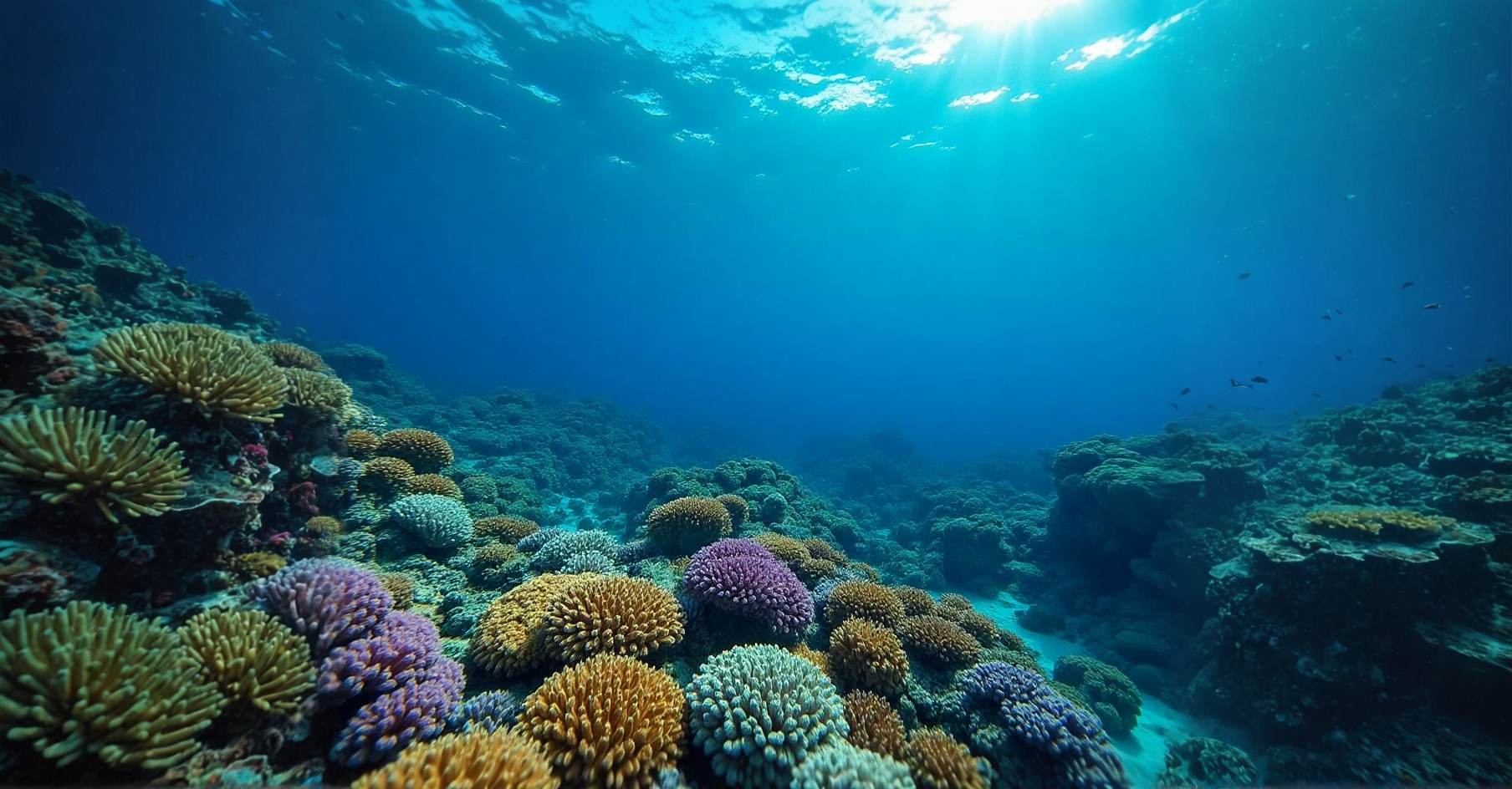
Marine biologists have long been puzzled by a stubborn pattern. During the heatwaves that have bleached reefs across the Pacific, a handful of reefs in the same waters have kept their colour while their neighbours turned white. Now a team of oceanographers thinks it has found why: a ribbon of cold water, rising from the deep along the slope of the reef, bathes those corals in temperatures several degrees cooler than the surface.
The current was discovered almost by accident. Researchers had anchored temperature sensors along a reef slope to study a different question when they noticed that sensors on one stretch of the slope consistently read cooler than the rest, even at the same depth. Follow-up dives and underwater gliders traced the anomaly to a narrow upwelling, where deep water is pushed upward as the prevailing current meets the shape of the reef. The effect is local, covering perhaps two kilometres of reef, but for the corals living there it is the difference between survival and bleaching.
Corals bleach when the water around them stays too warm for too long. The algae that live inside them, and give them both colour and most of their food, are expelled, leaving the coral skeleton white and starving. A few degrees of cooling can be decisive. During the most recent heatwave, corals in the cool-water zone showed almost no bleaching, while nearby colonies on the same reef lost up to 70 percent of their cover.
The discovery matters because it changes how conservationists choose which reefs to protect. Until now, reef protection has largely followed biodiversity: guard the places with the most species. The new findings suggest that places with natural cooling should get priority, because they are the most likely to survive the decades ahead. Survey teams are now mapping other reefs for similar upwellings, using temperature sensors and satellite data to find the cool spots before the next heatwave arrives.
There are limits to the good news. The cooling current does not protect against every threat. It cannot stop ocean acidification, pollution or destructive fishing, and if the ocean warms enough, even the upwelled water will eventually be too warm. The researchers are careful to call these reefs refuges, not solutions. But in a field where the news has been almost uniformly grim, a natural refuge is a meaningful find.
For the coastal communities that depend on reefs for food and storm protection, the practical consequence is clear. Protecting a cool-water reef costs the same as protecting any other, but the return is far higher if it is still alive in twenty years. As one of the researchers put it, "We cannot cool the ocean. But we can choose to defend the places the ocean already cools for us."