Science
A Battery That Charges in Nine Minutes Moves Closer to the Road
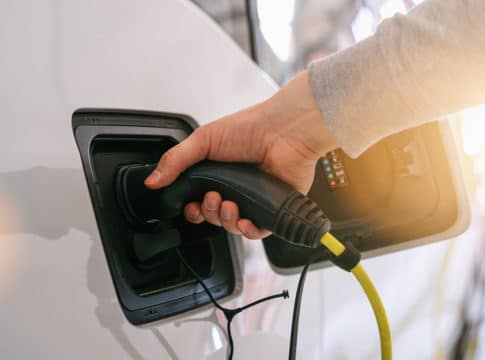
The most stubborn complaint about electric cars has always been the wait. A petrol stop takes five minutes; a fast charge takes closer to forty. A research team working on solid-state batteries says it has narrowed that gap to nine minutes, and unlike previous claims, the result survived the test that usually kills them: the cell kept working after 1,000 rapid charges.
Solid-state batteries replace the liquid electrolyte inside a conventional lithium-ion cell with a solid material. The design promises higher energy density, which means longer range, and much lower fire risk. For a decade the idea has been stuck in the laboratory because the solid layers crack, dendrites grow through them, and performance collapses after a few dozen cycles. The new cell uses a ceramic-polymer composite that flexes instead of cracking, and in testing it retained more than 90 percent of its capacity after 1,000 cycles of nine-minute charging.
That is a genuine milestone, but the people closest to the technology are the first to warn against excitement. "The chemistry works. Now the factory has to work," said a battery engineer at a European carmaker who has reviewed the data. Making solid-state cells at automotive scale means building entirely new production lines, and the ceramic materials are expensive. Industry estimates put the first commercial packs at 30 to 40 percent above the cost of today's batteries, which would add thousands to the price of a car.
The likely path to market is narrow. Premium models will get the technology first, where buyers will pay for a nine-minute charge and 500 miles of range. Delivery vans and taxis, which charge several times a day and lose money while parked, are the next obvious customers. Mass-market cars will wait until production volumes bring costs down, a process analysts expect to take five to seven years.
For drivers, the practical effect may arrive sooner than the technology itself. The publicity around fast-charging batteries is already pushing charging networks and carmakers to improve the current generation. New liquid-cooled chargers and better thermal management have cut typical charging stops to around twenty minutes on the newest models. The nine-minute battery raises the bar, but the race it started is already changing what a charging stop feels like.
There are caveats beyond cost. The test cells were small, roughly the size of a phone battery, and scaling up introduces problems that do not exist at bench scale, including heat distribution and manufacturing defects. Independent verification is still pending, and the research group has not yet published full data. Even so, the result has been welcomed by a field used to disappointment. After years of promises, a battery that survives a thousand fast charges is the kind of evidence the industry has been waiting for.